Key & Fold / game-night field notes

Make the table the place.

Qodunavi is a compact tabletop games studio for people who want a welcoming table, a clear first teach, and enough room for the conversation that happens between turns.

Practical prompts for ordinary tables, new groups, and repeat nights.
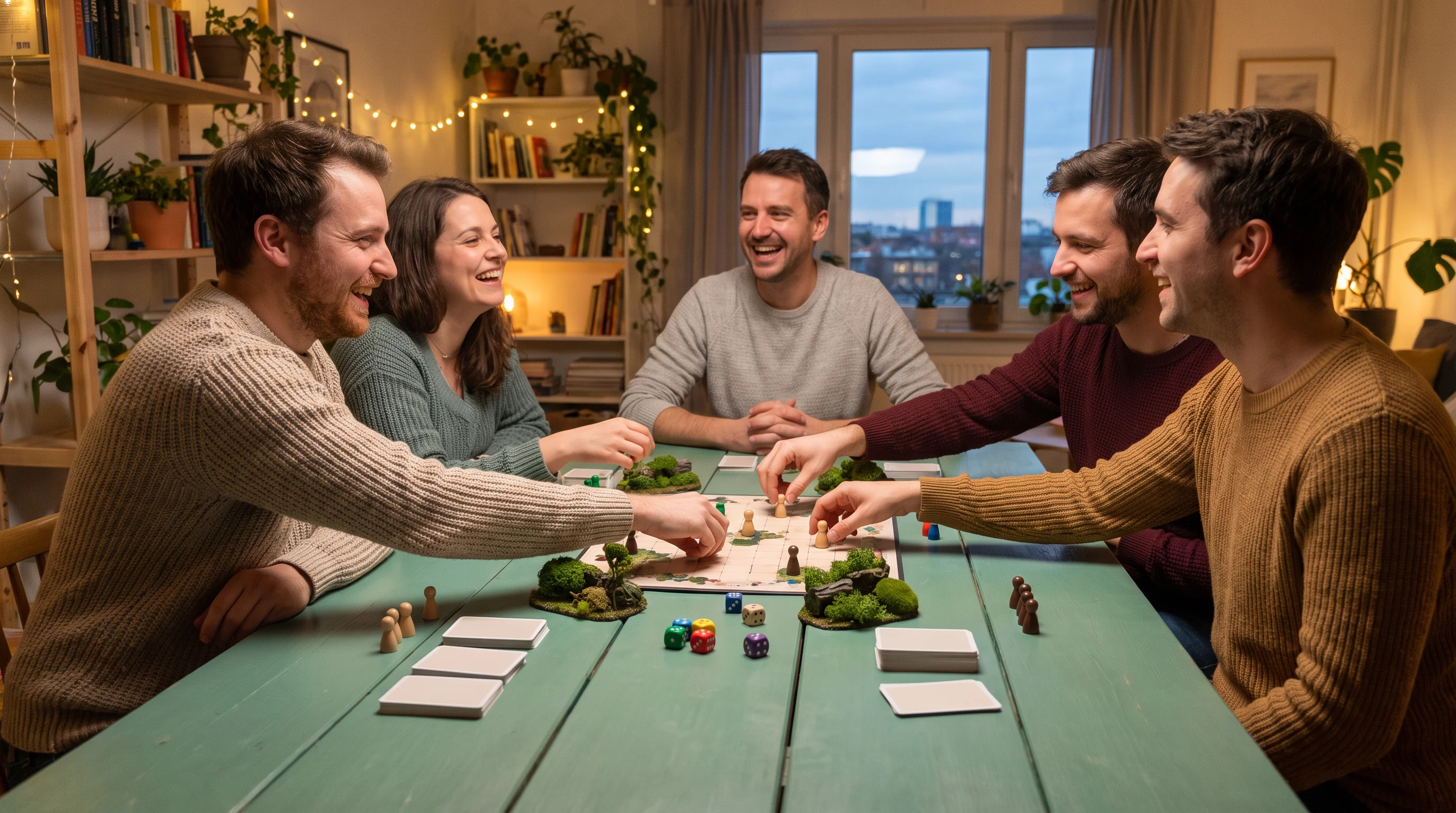
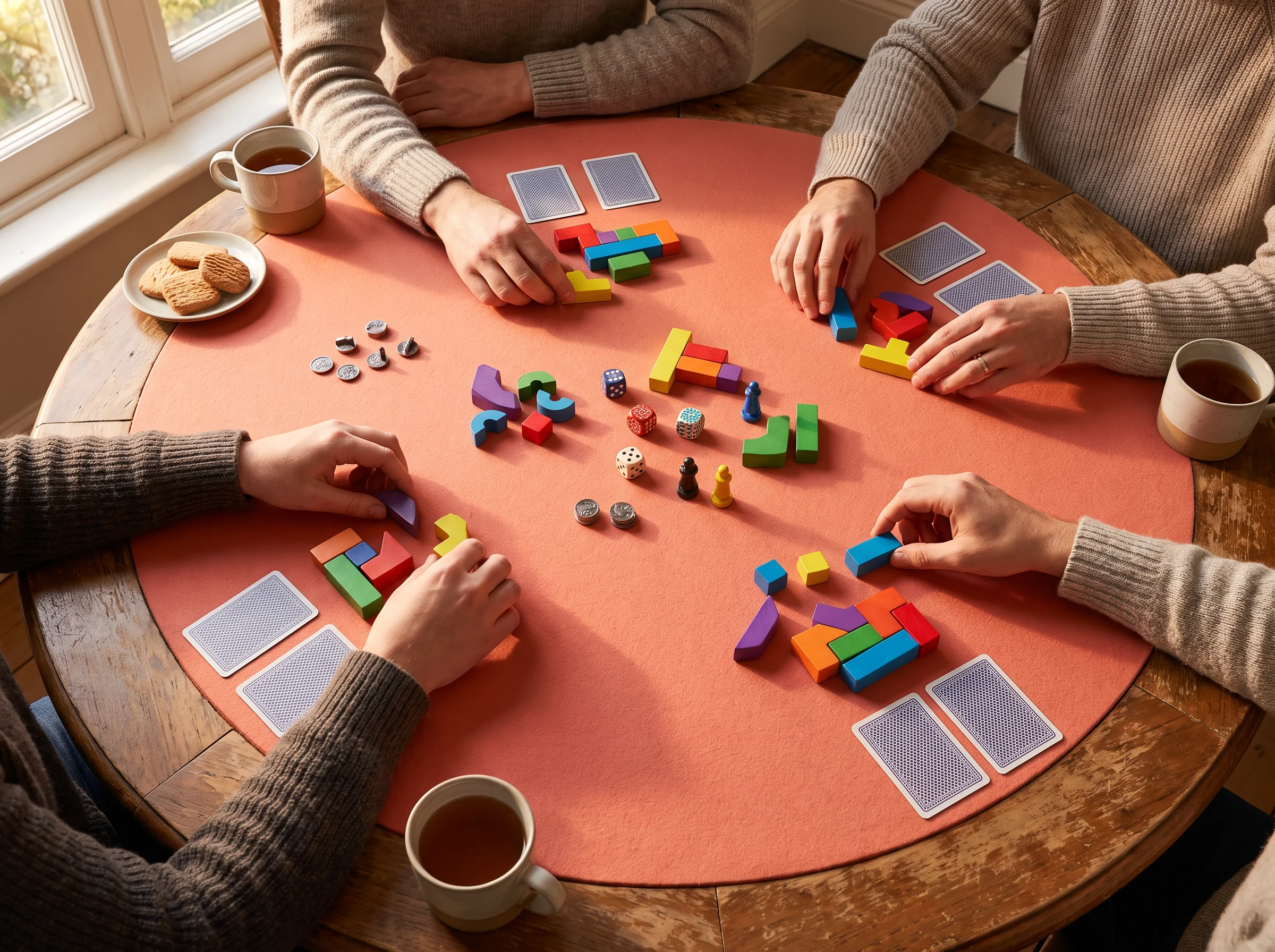
Five friends gathered around a seafoam game table Overhead view of hands moving colorful tabletop pieces
Start with the peoplethen unfold the game
01 / pocket game atlas

Choose a shape for the night.

A small vocabulary helps a group decide before opening a box. Browse by the kind of attention you want to share, not a score or a shelf label.

Gentle entry

Warm-up table

Easy decisions, visible turns, and room to arrive while the kettle finishes.

Shared puzzle

Co-op table

Talk through a plan, make useful mistakes, and celebrate the close calls together.

Lively turn

Quick table

Short rounds and clear resets for a group that wants momentum more than ceremony.

Long look

Slow table

Space to study a map, make a plan, and let the table become the evening.

02 / game-mode switches

Tune the room before you teach.

These small switches are not rules. They are ways to match a game’s energy to the people already at your table.
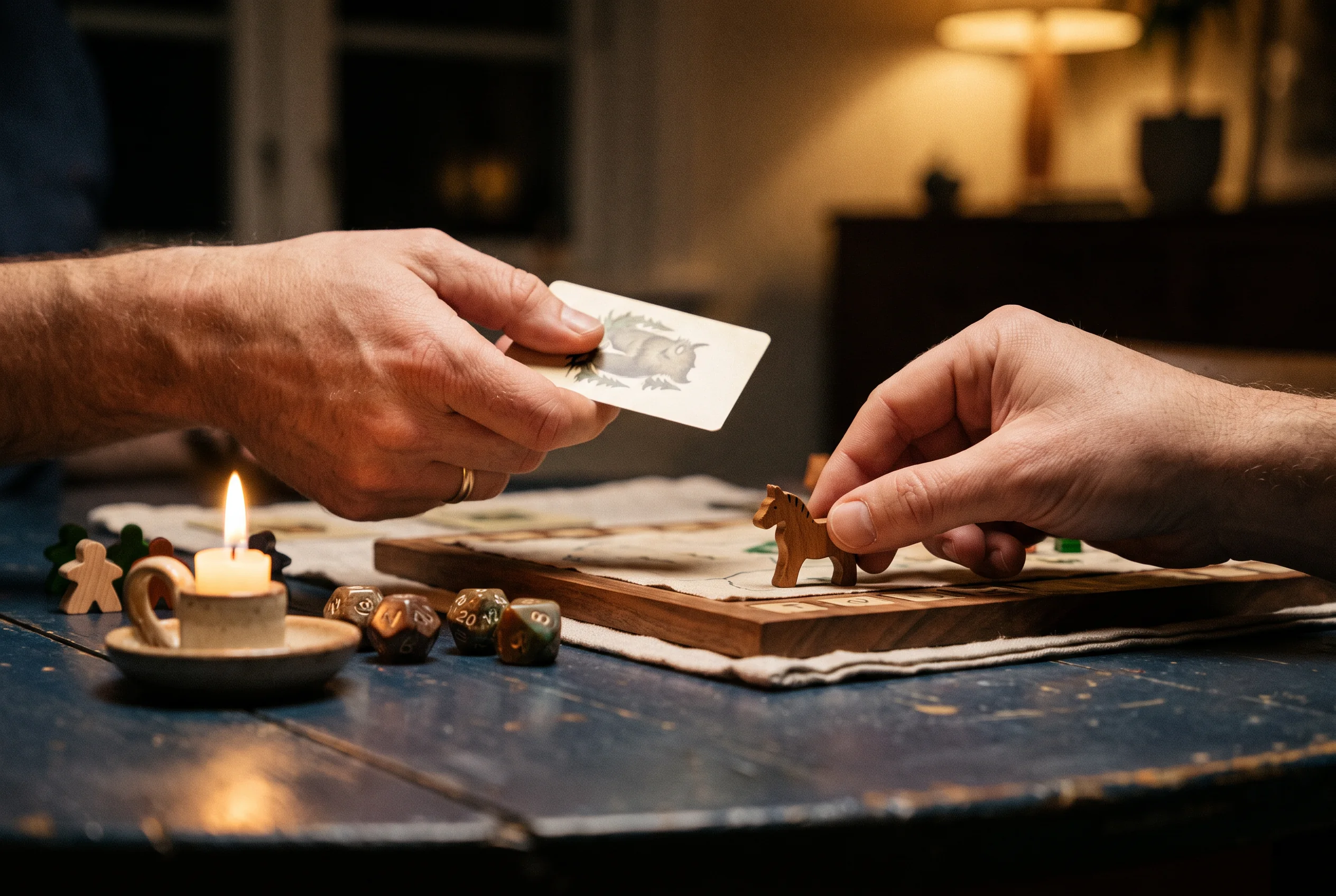
First-time players

Leave a little air around the first round.

  • Name the shared goal before naming exceptions.
  • Give everyone one helpful option rather than every possibility.
  • Play a visible practice turn, then hand over the pieces.
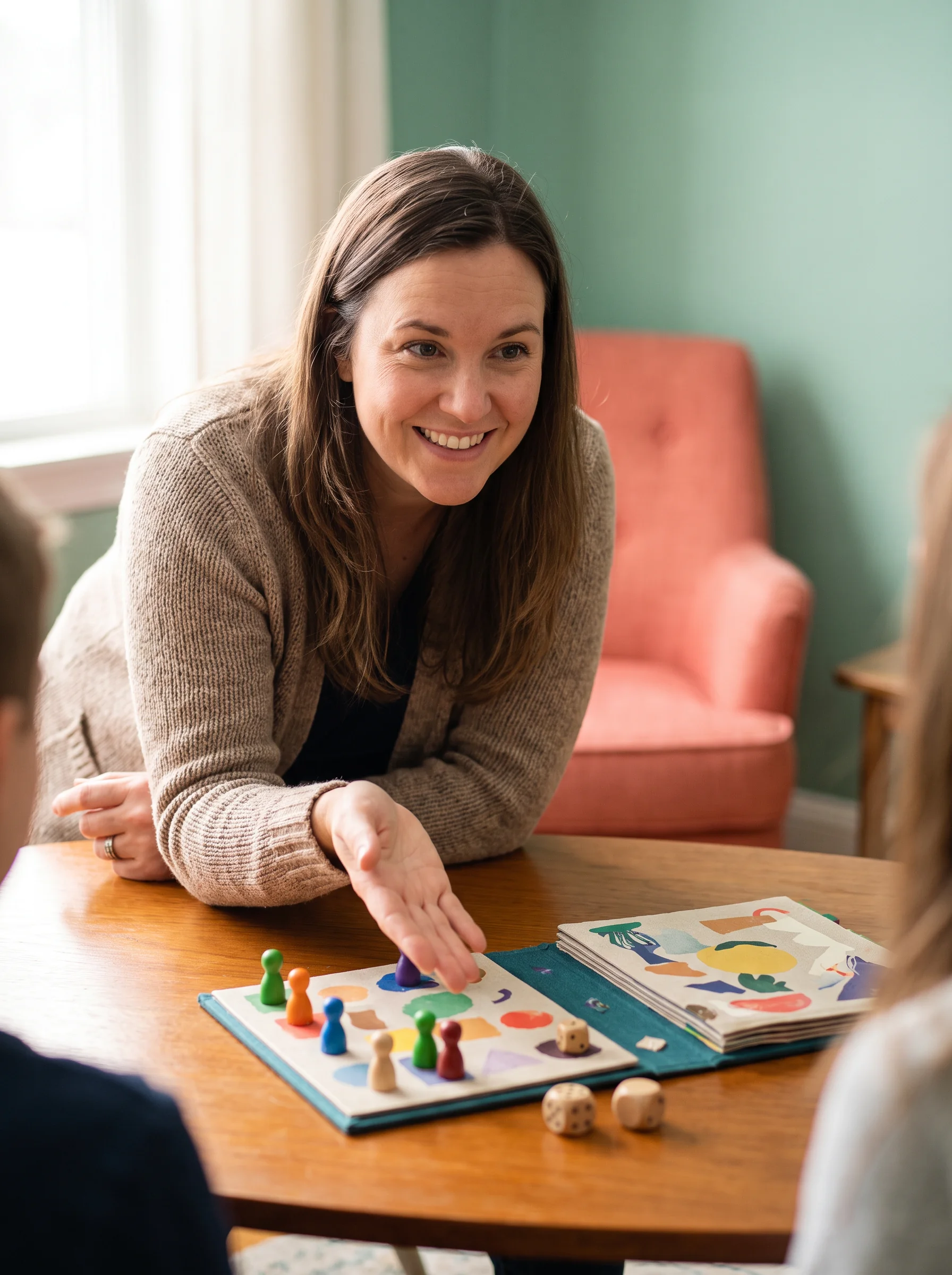
Game host explaining pieces at a wooden table
03 / fold-out table-size guide

Measure the mood, then the table.

A useful play surface has a home for hands, snacks, and the bits nobody wants to knock over. Fold this guide into the size of the night you’re hosting.

Three friendly table footprints

Leave an edge for elbows
small square

Two-player pocket

Keep one shared center, one side space each, and move the box away after setup.

round table

Four-person loop

Use a lazy center: cards and markers rotate toward the active player as turns change.

long table

Group map

Place common pieces in the middle and give every player a small, repeatable home zone.
04 / real game nights

A table is a tiny shared landscape.

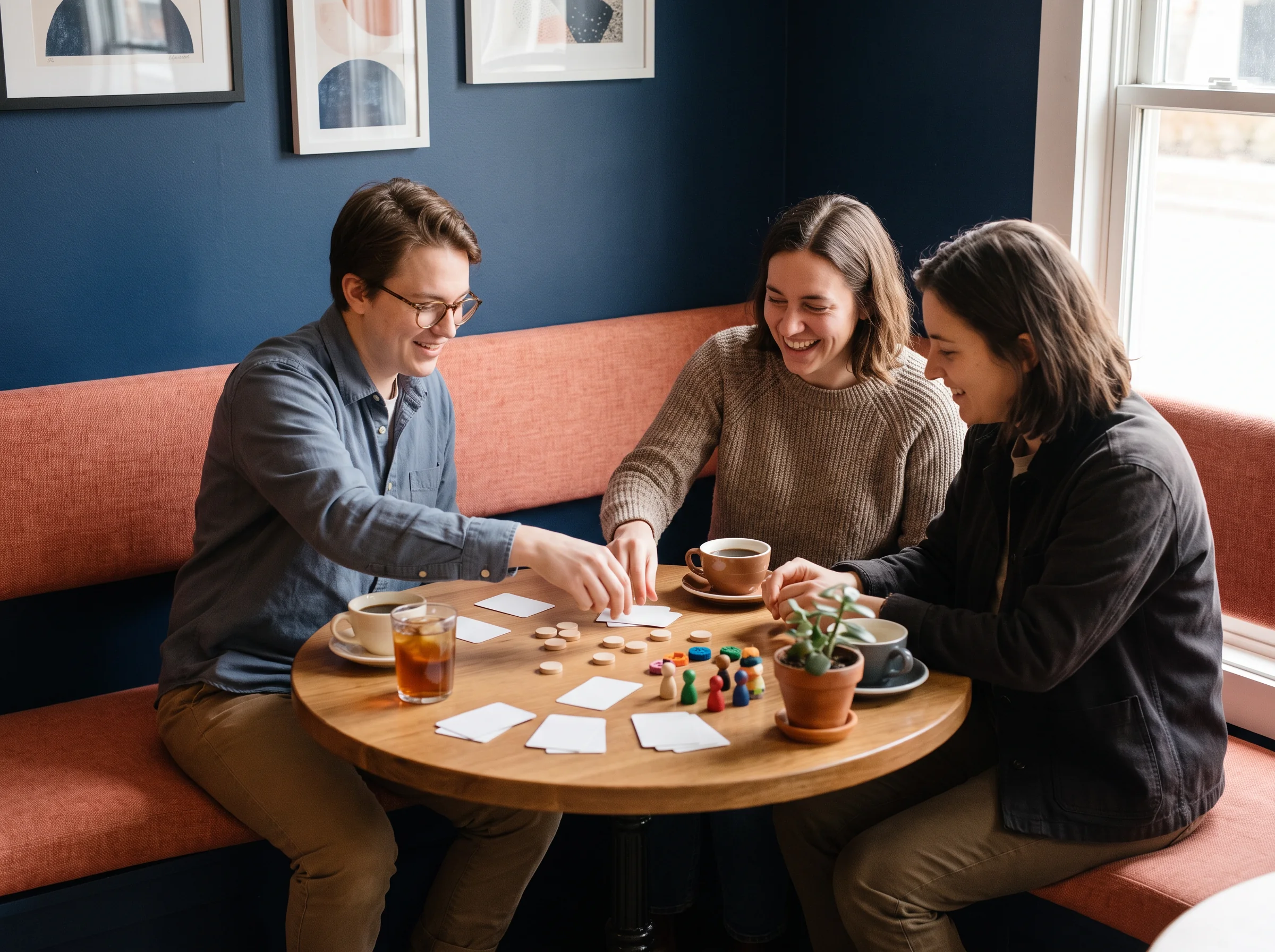
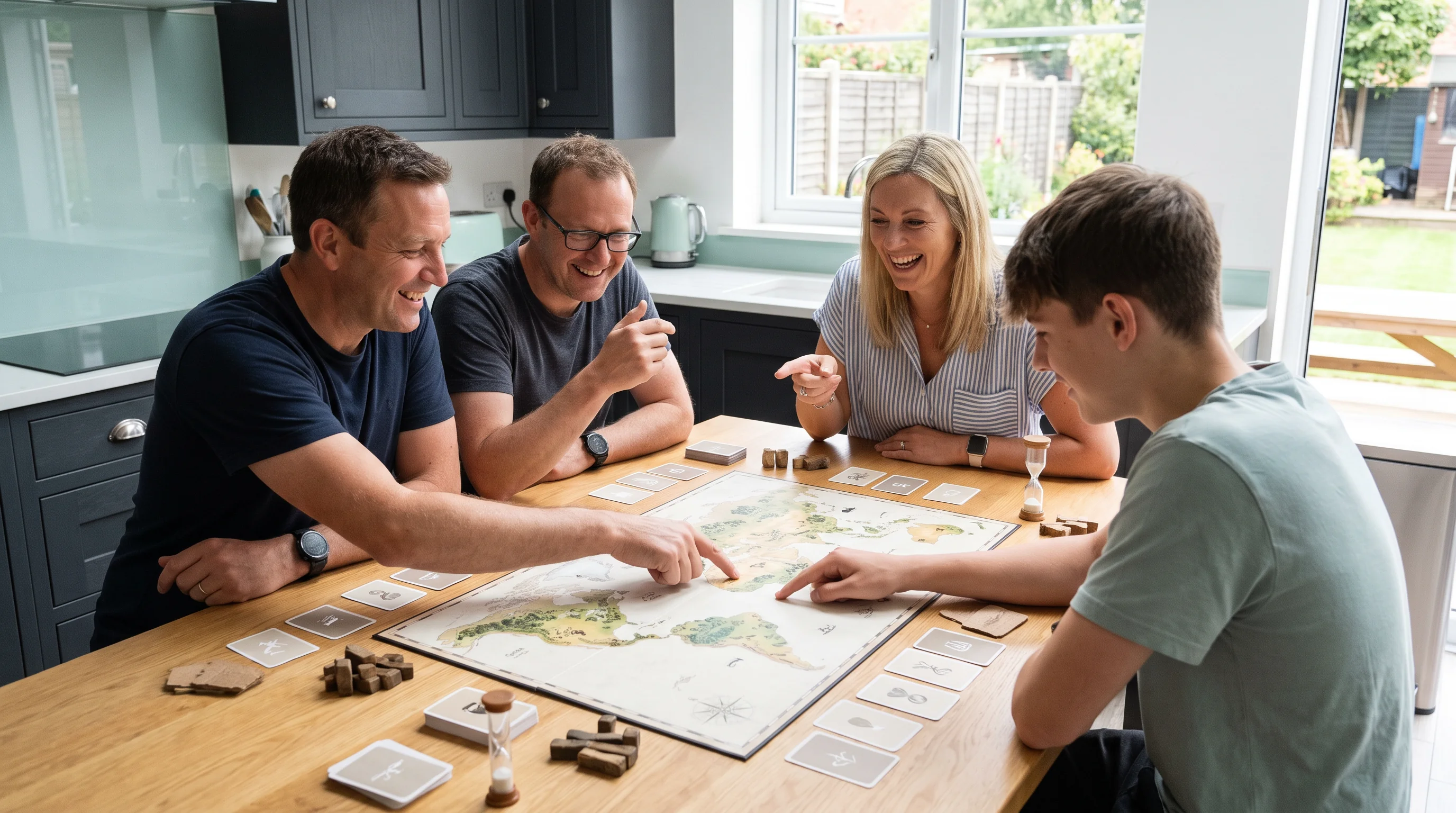
Family group considering a cooperative board game
Make the map common ground
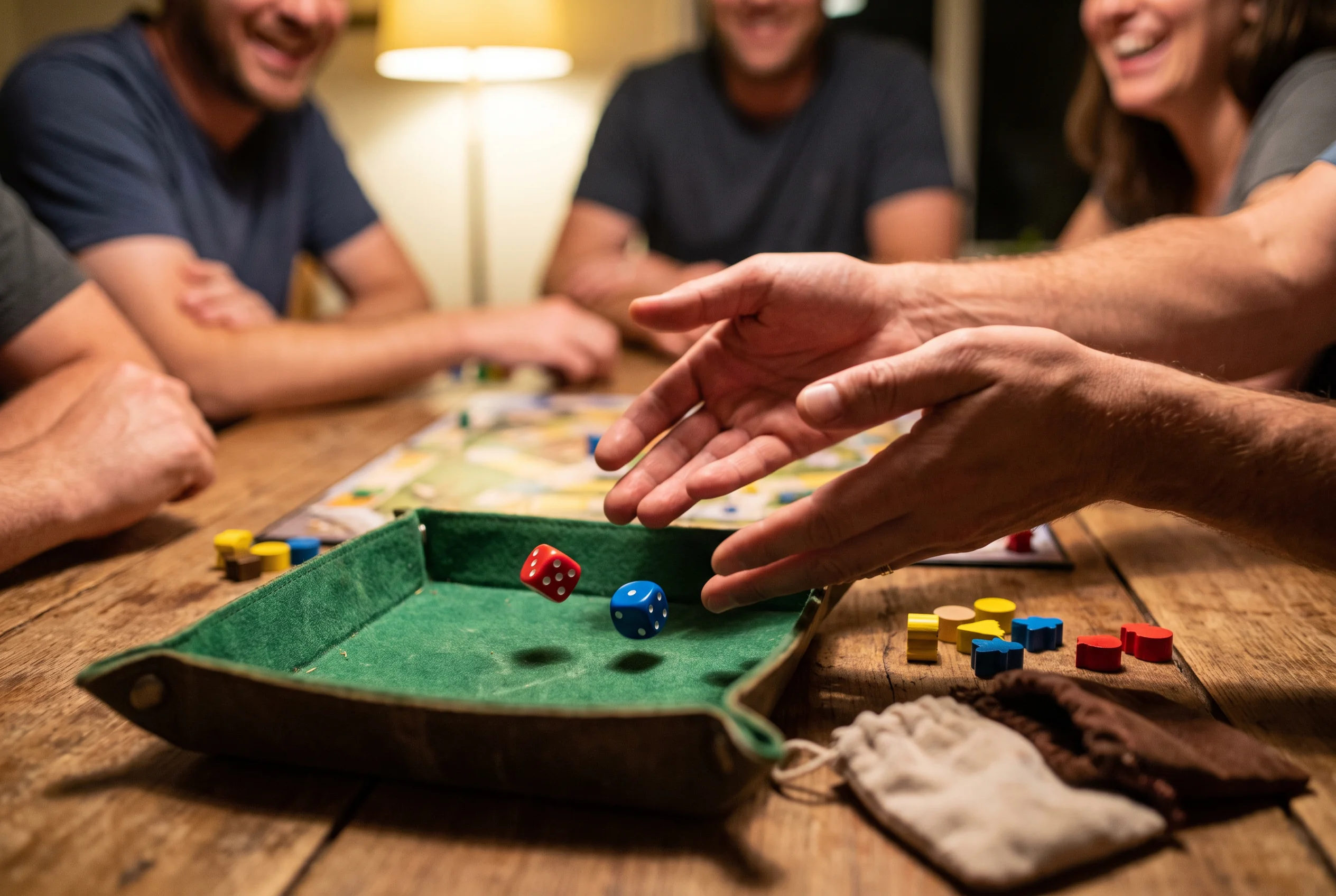
Hands rolling dice into a felt tray
Give chance a landing spot
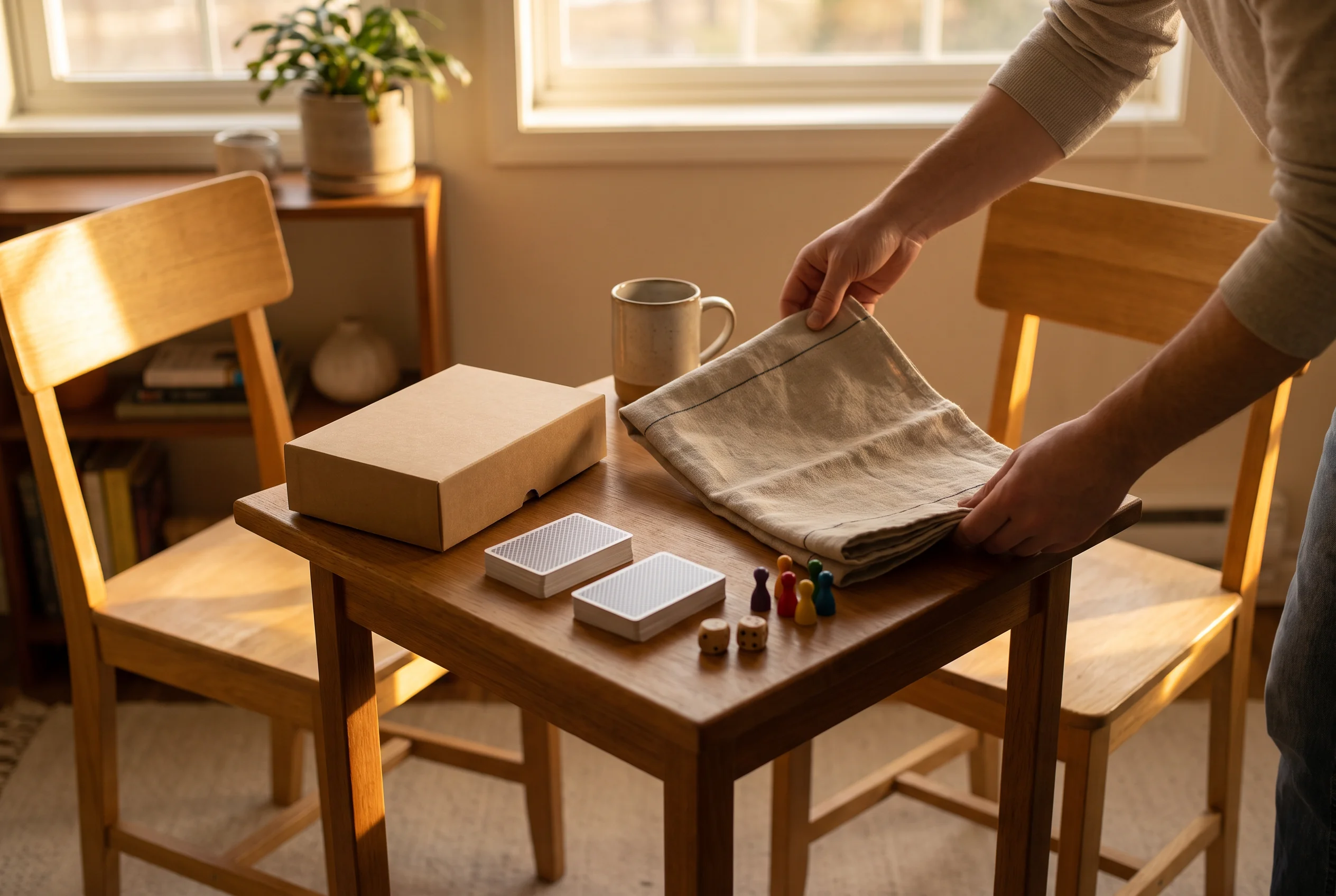
A compact table being set for two players
Set before friends arrive
05 / two-player conversation cards

Four prompts for the space between turns.

Use one when the board is quiet. Skip it when the game is loud. There is no need to turn a game night into an interview.

What kind of move do you like making even when it does not work?

Which game object feels best to hold: cards, dice, miniatures, or tokens?

What helps you rejoin a game after a surprising turn?

If this table had a soundtrack, when would it get quiet?

06 / teach-in-five board

A short teach can still be generous.

Select a step to build your own five-minute route. Start with orientation, not the glossary.

Step 01 / 05

Show the table before the rules.

Point out the shared area, each player’s space, and the one object that moves every turn. People understand a rule more easily when they know where its pieces live.
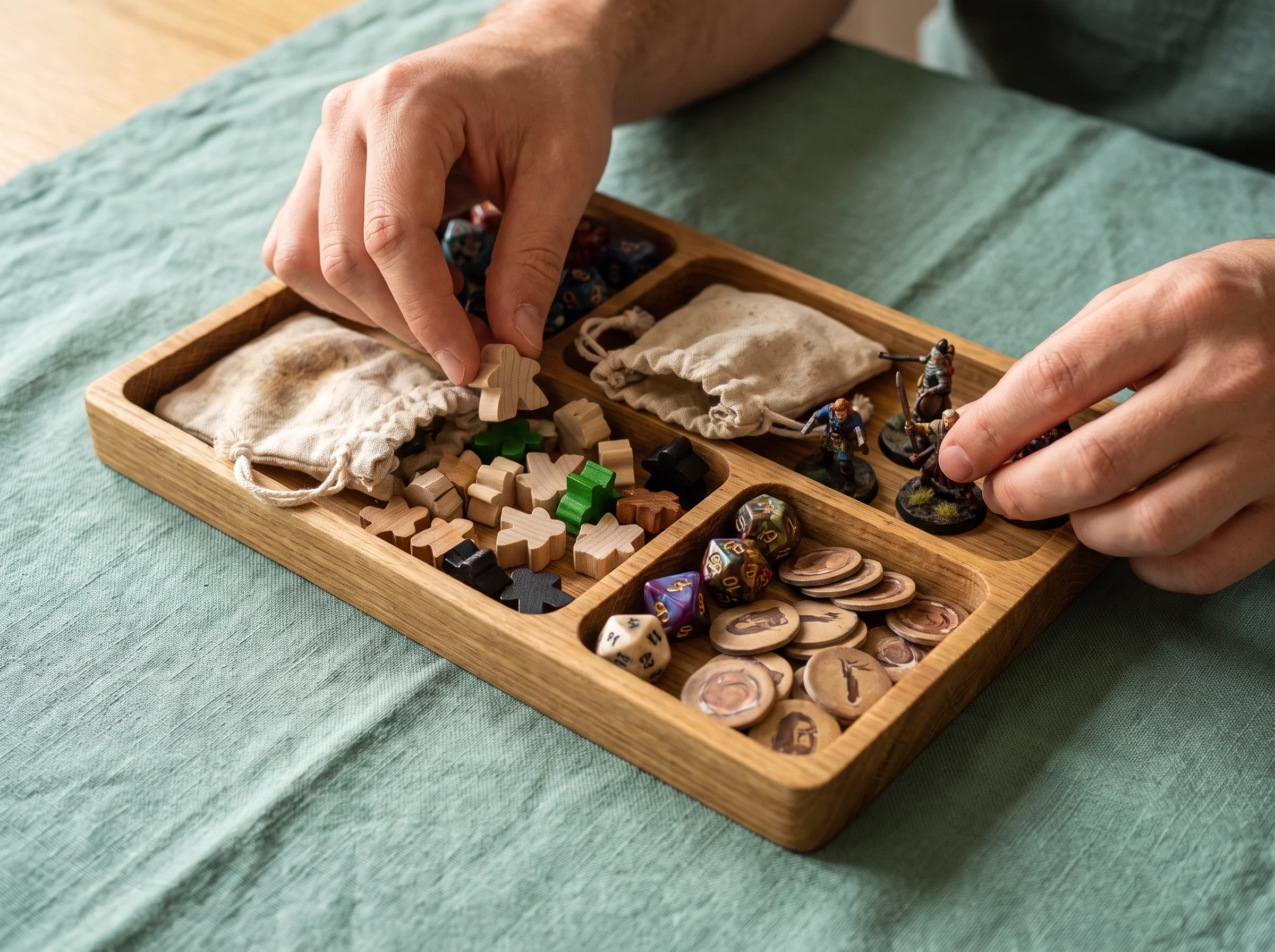
Hands sorting miniature figures and wooden pieces into a tray
07 / component reset kit

End the game so the next table can begin easily.

A reset is a small act of hospitality for your future self and the next group. Keep it visible and calm rather than racing for the lid.

Gather by material

Cards first, then wood, then loose markers. It reduces the last-minute scavenger hunt.

Give odd pieces a home

A tiny cloth bag or tray makes one-off pieces easy to count without making a performance of it.

Reset the shared center

Return the board to its starting calm so the opening move feels legible next time.

08 / invitation checklist

A good invite gives people an easy yes.

Check what you already know. The counter is saved only in this browser, so it is a gentle scratchpad rather than a sign-up list.
Tonight’s note

0 / 6 ready
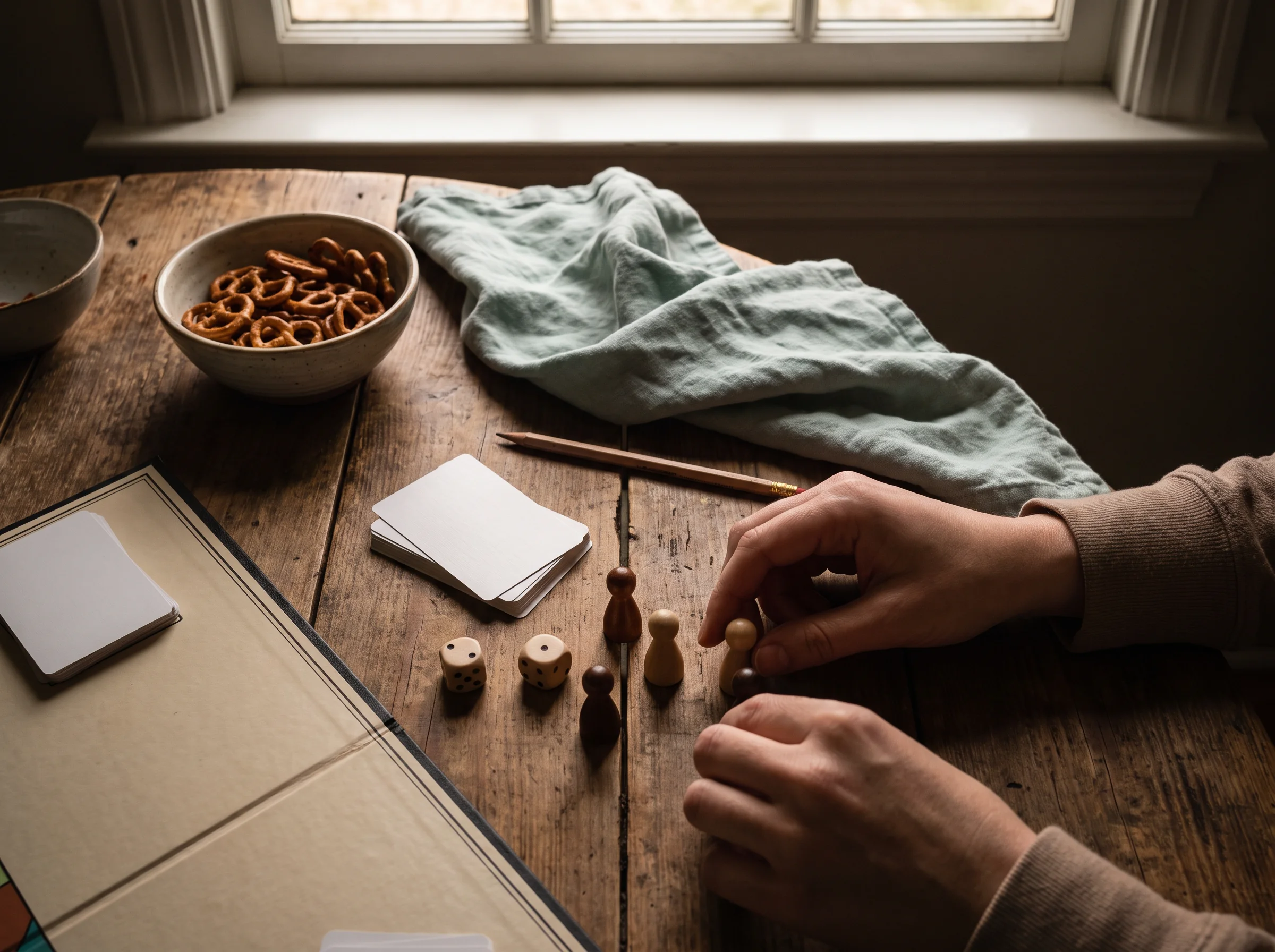
Hands arranging wooden pawns, dice, cards, and snacks for game night
09 / frequently asked

Useful answers, without the hard sell.

Qodunavi is an informational tabletop-games studio. These notes are for hosts and players who want their games to feel more approachable.

No. Most of these notes begin with an ordinary kitchen, coffee, or small dining table. The key is not a specialised surface; it is making a shared center and leaving clear little homes for hands, drinks, and personal pieces. A folded cloth, tray, or spare plate can solve more than expensive furniture.

Start with what everyone is trying to do and where the main pieces live. Then take one simple, visible turn together. It is usually kinder to name an unusual rule only when it is about to matter than to front-load every exception. People can ask a better question once they have touched the game’s central loop.

Give the group permission to reveal a helpful option during the first round, and treat that round as a shared rehearsal rather than a test. Say whose turn is next, keep choices visible, and check that everyone can reach the common area. Friendly competition has room for tactical play and still leaves people feeling invited back.

No. This site shares practical, independent game-night guidance and conversation prompts. It does not take reservations, process payments, or promise availability for events. If you want to share a hosting question or an idea for a future note, you can prepare a message to our email address; sending it remains entirely in your control.
10 / contact

Leave a note for the next fold.

Have a question about making room for a game? This form only prepares a draft email on your device. It does not send anything automatically.

Please add a name before preparing the draft.
Please use an email address with an @ sign.
Please add a short note before preparing the draft.